2026.05.25
Making of Memories
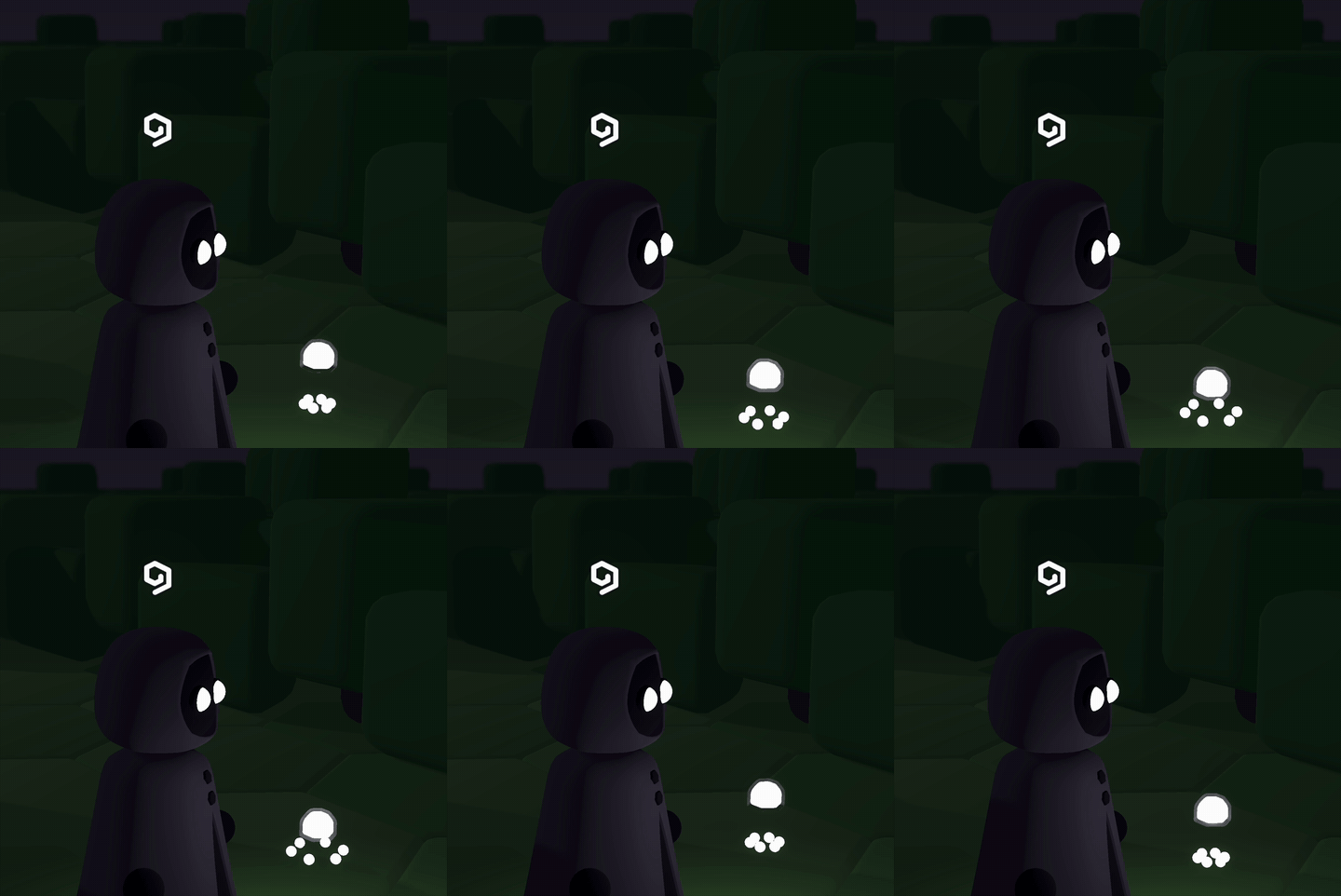
Found’s world has 217 levels, or world fragments. Each one contains a memory hidden somewhere in the level hex’s maze. These memories are fragments from Em’s mind, scattered in the same way the world itself has been scattered. They tell the story of who Em was before everything broke apart.
They are not the main point of the game. The player only needs to find the first memory to progress the story. The remaining 216 are completely optional, but they create more history around Em, and a deeper connection between the player and the character they’re guiding through the world.
So for a casual player, memories are little discoveries. Souvenirs from the places they’ve been. For a completist like myself, they’re an obsession.
Originally, the memory interface was very simple: a scrolling list of text. The idea was that players could collect memories, read through them one by one, and gradually piece together something that felt like a story. Some memories would be small and ordinary. A few would carry more weight. Together, they would create a fuller picture of Em.
I designed the first interface around this approach. Each memory was a single sentence in a scrolling list. The earliest memories appeared at the bottom, while the most recent appeared at the top. Read together, they would move chronologically through the events leading up to the game. Any memory that had not been collected would appear as a line with only an ellipsis.
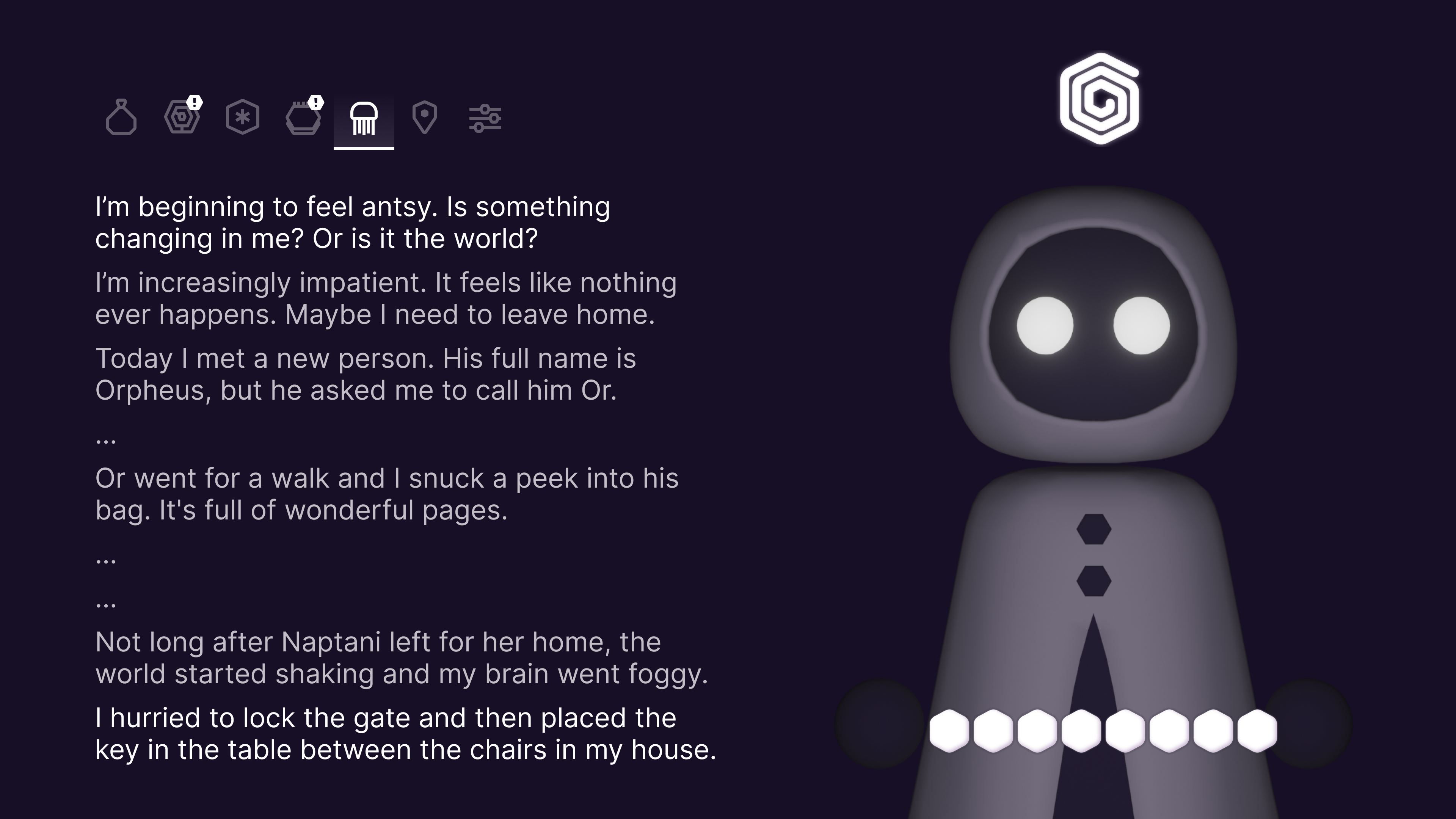
In theory, this made sense. In practice, creating a story where each of 217 lines was individually meaningful was a nightmare. Everything was trying too hard, and the memories started to blur together. There were other problems too. The interface highlighted where there were gaps, but only in a way that was frustrating – not one that motivated the player to find those missing pieces. And even if the player were compelled to collect every last memory, the list emphasized absence. It didn’t help them find what was missing.
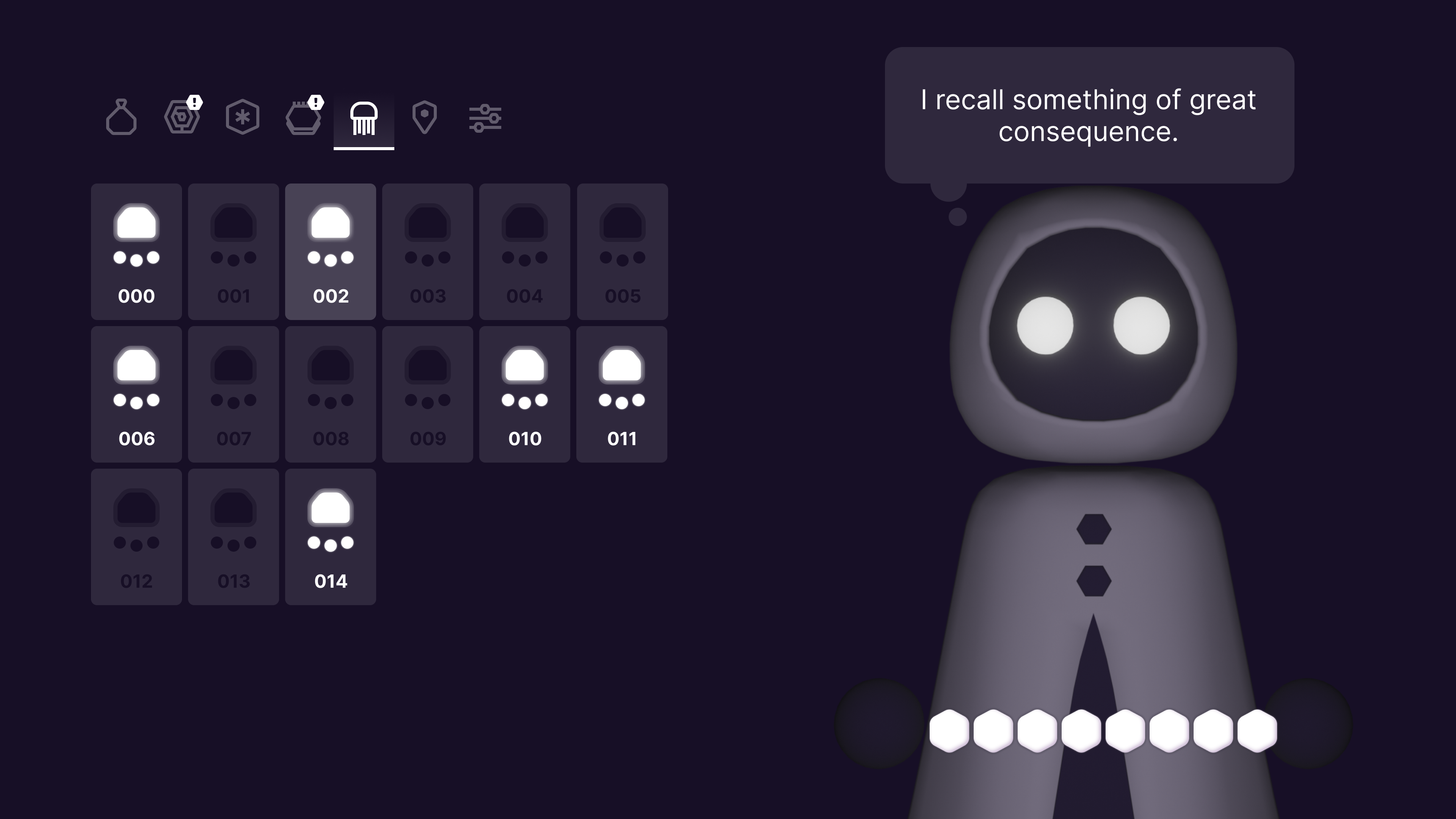
So I stepped back, reassessed the content and the goals of the interface, and rebuilt it as a grid highlighting where memories were found and where they weren’t. That solved one problem, but created another: the player could no longer read the individual memories directly from the list. At first, I thought the player could click into each one, as they might an item they wanted to learn more about. I wanted the interface to reinforce that these memories were part of Em, not just collectibles in an archive.
I landed on having the memories appear above Em’s head in a thought bubble. The player can scroll through and read quickly, almost as quickly as they could before. But now each memory remains connected to its place in the world, and to Em themself. The interface is still functional, but it feels less like opening a database and more like listening in on a thought.
What did I learn from all of this? Sometimes the better interface is not the one that shows the most content. Sometimes it is the one that makes the player want to go looking.