2026.06.09
Designing for Discovery
Of the 217 levels in Found, 16 are anchored, or pre-placed, in the world. Everything else has to be found and placed by the player. At first, there are limits. The world is divided into zones, which gives the player a bit of structure as they begin discovering the world and the cultures that inhabit it. Those limits last for the first 100 levels. After that, the world opens up, and the player has more than 100 fragments they can place anywhere on the remaining grid.
As players place those fragments, they start developing strategies.
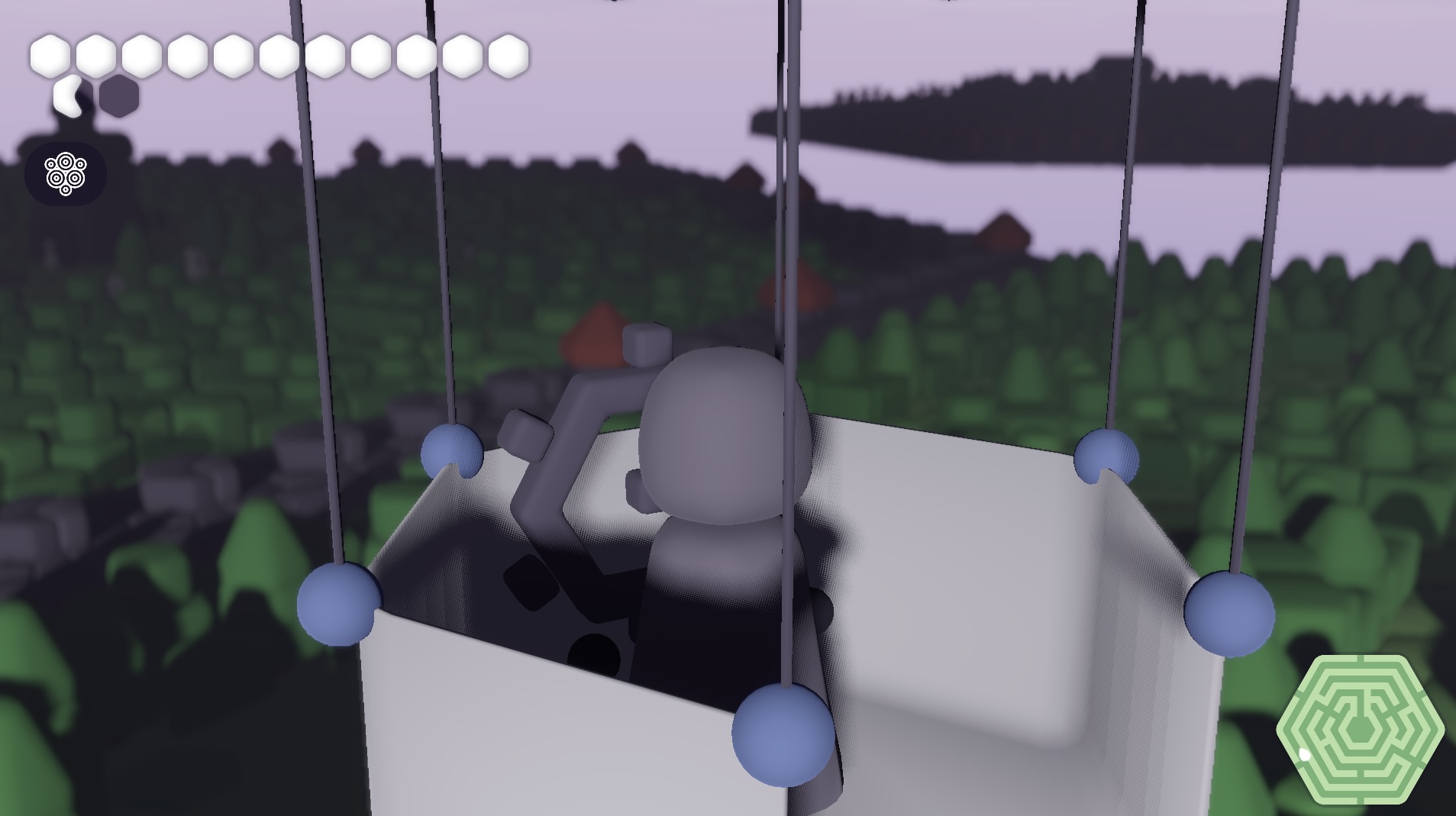
Some levels are easy to move around. Others require navigating twisty mazes full of enemies. Some have places to land the hot air balloon, which is the game’s main mode of transportation. Some have houses with beds, giving the player a place to recover. So the design question became: How much information should the map provide?
The player needs enough information to make intentional choices. If they are trying to create a useful travel route, avoid difficult paths, or make sure they have places to rest, the map has to support that. But Found is also a game built around discovery. If the map explains too much before the player has actually entered a level, it starts to give away the experience.
Originally, the 2D tiles only showed the walls of the maze. Sometimes this was an accurate representation of how the level worked. Other times, elevation created hidden passages or shortcuts that weren’t visible from the map alone. I considered adding more, but this felt right. The tile gave a hint of the level’s shape, but not the whole truth. Then my playtester started struggling with where to land his hot air balloon.
That feedback made sense. Landing spots are not a secret in the same way a hidden passage or unusual structure might be. They are part of the player’s ability to plan. So I added a campground indicator. Campgrounds can be used either to pitch a tent and sleep or to land the balloon, though never both at the same time. That solved one problem, but it created a new consistency question: The placeable tiles have campgrounds, but the anchored city tiles have towers where the player can land the balloon. If campgrounds were marked, towers probably should be too.
And once I started adding towers, I briefly went down the path of drawing every building onto the map.
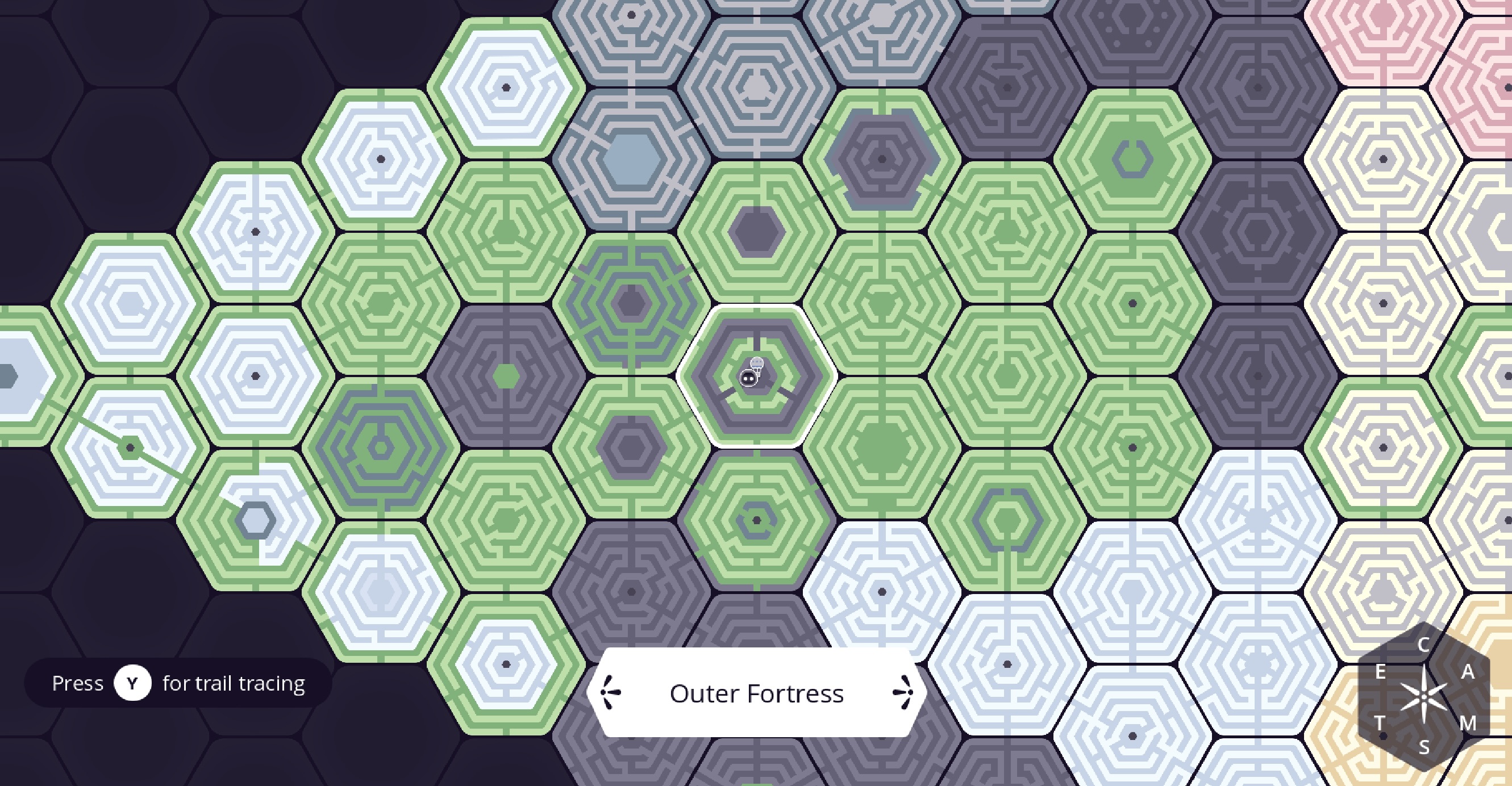
This is where the feature started to feel inauthentic to the game. One of the joys of Found is discovering what exists inside each fragment. Drawing every structure onto the tile before the player has experienced it prioritizes knowing over exploring. It turns the map into a summary of the world instead of an invitation into it. This is antithetical to the experience I’m trying to create.
So for now, I’m only mapping landing spots, including towers. Those are strategic tools, and players need to see them in order to make good decisions. But I’m not mapping every other building. I’m still considering whether buildings should appear on the map after the player experiences them. That might preserve the feeling of discovery while still letting the map become more useful over time. We’ll see.
For now, the balance is this: the map should help players make plans, but it should not let them skip the act of discovery.